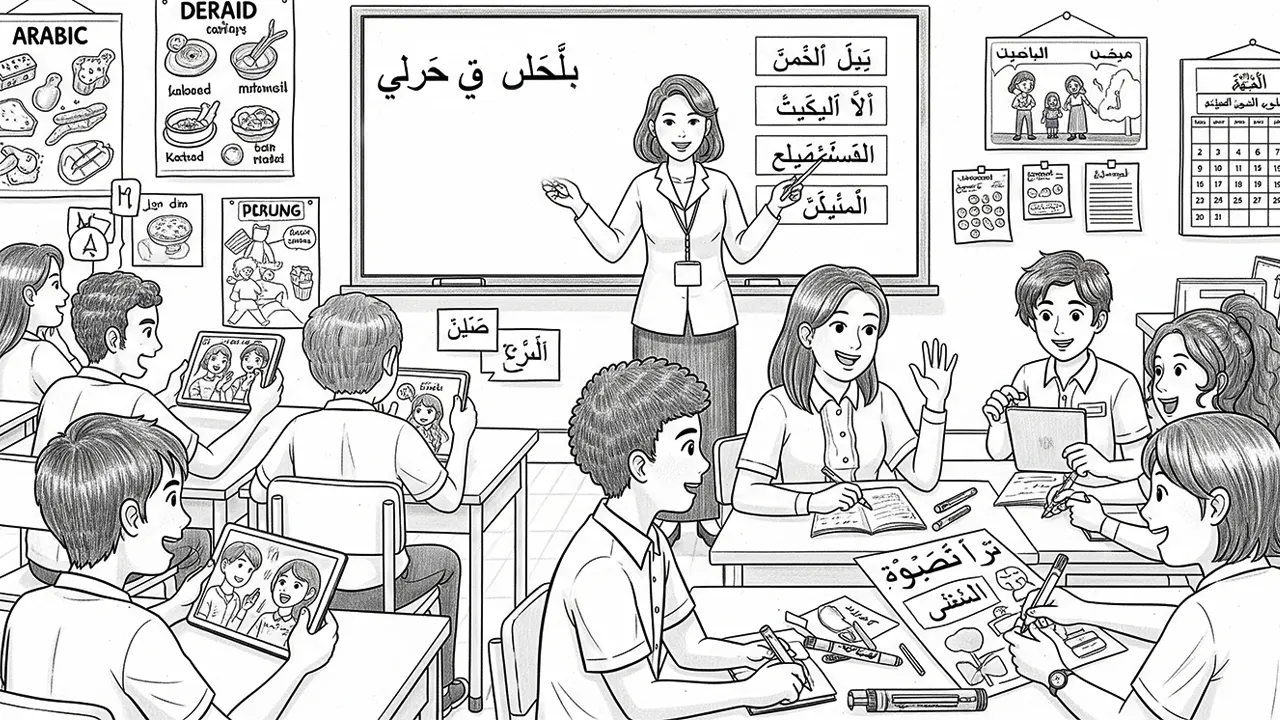
Arabic is one of the international languages with significant importance in the Islamic world. In Indonesia, Arabic is taught at various levels of education, including junior high schools. However, many students find learning Arabic challenging due to its perceived complexity, unfamiliarity, and lack of relevance to daily life.
In the era of globalization, Arabic language proficiency has become increasingly important, especially for young Indonesians. Arabic is not only the language of Islam but also a global language used in fields such as science, technology, and business.
Mastering Arabic opens up broader opportunities for children in the future, both in education and career. However, for junior high school students, Arabic is often seen as difficult and tedious. Therefore, effective and engaging teaching strategies are needed to help students develop their Arabic language skills optimally.
An effective learning strategy must take into account the developmental characteristics of junior high school students, who are still in the process of cognitive and psychomotor growth. They require a fun, interactive, and relevant approach.
Learning materials should be presented in a systematic and gradual manner, starting from the basics and increasing in complexity over time. The use of varied methods—such as games, songs, videos, and technology—is essential to maintain students’ motivation and interest in learning.
Characteristics of Arabic Language Learning in Junior High Schools
Arabic language learning is characterized by several key aspects. First, the Arabic script is unique and written from right to left, which requires special adaptation from learners. Second, its complex grammatical structure—including i’rab (case markers), diverse verb conjugations, and flexible word order—demands deep understanding and consistent practice. Third, Arabic has a rich vocabulary often derived from common root words, requiring effective memorization strategies and understanding of etymology.
Fourth, Arabic learning is deeply influenced by culture and religion, making it not just a language acquisition process but also a journey into Islamic cultural and religious contexts. Fifth, learning resources range from traditional textbooks to modern digital tools, necessitating wise selection and use.
Lastly, teaching methods vary—such as communicative, grammatical, or thematic approaches—and must be tailored to students’ needs and characteristics.
Effective Strategies in Arabic Language Learning
The following are several proven strategies for improving Arabic language skills among junior high school students:
- Communicative Language Teaching (CLT)
This approach emphasizes using Arabic for real communication. Teachers encourage students to practice speaking, listening, reading, and writing in authentic contexts through dialogues, role-playing, and simulations of daily situations in Arabic. - Interactive Learning Media
Using tools such as animated videos, Arabic language learning apps, illustrated flashcards, and Arabic songs can spark students’ interest and aid in vocabulary and grammar acquisition. Digital media also help create a dynamic and engaging learning environment. - Project-Based Learning (PBL)
Students are involved in simple projects like creating a mini dictionary, recording a self-introduction video in Arabic, or performing short Arabic skits. These projects foster collaboration, creativity, and a sense of ownership in the learning process. - Daily Use of Arabic in the Classroom
Teachers can incorporate Arabic into everyday classroom instructions—such as greetings, questions, or commands—to build positive habits and boost students’ confidence in using the language actively. - Contextual and Meaningful Learning
Learning materials should be connected to students’ daily lives to make them more relatable and easier to understand. For example, teaching vocabulary related to school, food, family, and daily activities in Arabic.
The Role of Teachers in Learning Strategies
Teachers play a critical and strategic role in the learning process. They are not merely content deliverers but also facilitators, motivators, guides, and evaluators. Below are the key roles of teachers in Arabic language learning:
- Learning Strategist
Teachers are responsible for designing learning strategies that align with students’ characteristics, learning objectives, and content. The right strategy improves learning effectiveness and efficiency. - Learning Facilitator
Teachers create a supportive learning environment and provide access to relevant learning resources. They also facilitate discussions, group work, and other activities that actively involve students. - Motivator
Teachers inspire students to stay enthusiastic about learning through emotional encouragement, engaging delivery, and positive reinforcement. - Guide and Counselor
Teachers assist students in overcoming learning difficulties and also serve as counselors who understand students’ academic and emotional needs. - Evaluator
Teachers assess how well learning strategies work and use the results to reflect and improve future teaching practices. - Role Model
Teachers serve as examples of positive behavior, values, and ethics. Through their conduct, they contribute to students’ character development.
Ultimately, the success of any learning strategy greatly depends on the teacher’s active involvement and professionalism. With thoughtful planning and reflective execution, teachers ensure that the learning process is meaningful and sustainable.
Conclusion
Arabic language learning at the junior high school level requires creative, communicative, and relevant approaches that align with students’ developmental needs. Effective strategies must enhance student interest, engagement, and confidence in using Arabic actively.
Approaches such as communicative teaching, interactive media, project-based learning, daily Arabic use in the classroom, and contextual materials not only improve students’ theoretical understanding but also develop their practical language skills.
In this regard, the teacher plays a vital role as a strategist, facilitator, motivator, and role model. The success of any learning strategy largely depends on the teacher’s ability to manage the classroom, choose appropriate methods, and guide students with empathy and inspiration.
By implementing these effective strategies, junior high school students are expected to significantly improve their Arabic proficiency, both in comprehension and communication.
Supervisor: Dr. Muhammad Iman Sastra Mihajat, Ph.D